On Irishing

We gathered our Irish spirits in the gloaming of Friday evening, dining with friends and family on Corned Beef and Cabbage, finishing up our meal with Barmbrack fruitcake and pecan whiskey hard sauce. Not until Saturday did we think to dive into Spotify for tunes and dirges, a cacophony of fiddles and flutes, rogues with whiskey rough voices shouting drinking songs, and tenors crooning ballads.

Treasured neighbors joined us for Guinness stew on Saturday evening, sitting around afterward over oat-crusted apple crisp, sipping Sexton single malt (or wine or water), tapping our toes, telling our stories. Whether true or not, surely, we all have a little Irish in us.

Potato pancakes and smoked salmon with dill cremaSunday morning, inspiration struck and brunch topped the fare of the weekend: soft scrambled eggs flecked with green, black bread toast, smoked salmon with watercress and dilled crème, mashed potato pancakes—a meal to inspire memories. I dug into my writing and research archives, finding the census reports documenting my grandparents, next rooting through old photo albums, scanning the treasures I found.

In 1900, my paternal grandparents were born, one generation removed from the Irish potato famine, bred of hardworking peasant stock from County Cork. If Grandpa White had been born in Ireland, would he have migrated north, finding work among the shipwrights of Belfast who built the Titanic, instead of becoming a pipe-fitter and welder for the Tennessee Valley Authority?

The 1920 U.S. census listed my grandmother, Lottie Dale Barney Fagey, as a “housemaid” in the home of a widow who inherited and ran her late husband’s mercantile business with her two adult sons. The husband most likely died in The Great War. Lottie Dale cooked, cleaned, and looked after Widow Tompkins’s 9-year old daughter, Margaret.

Not two years later, on my father’s birth, young Lottie became known as Dale White. One picture survives from her courtship with my grandfather, Cletis Goldie White. Dale wears a smocked apron overdress and a haircap, standing with her hands clasped in front. Cletis grips a tree branch, hanging playful and teasing, kicking his feet, his Paddy cap tilted rakishly.
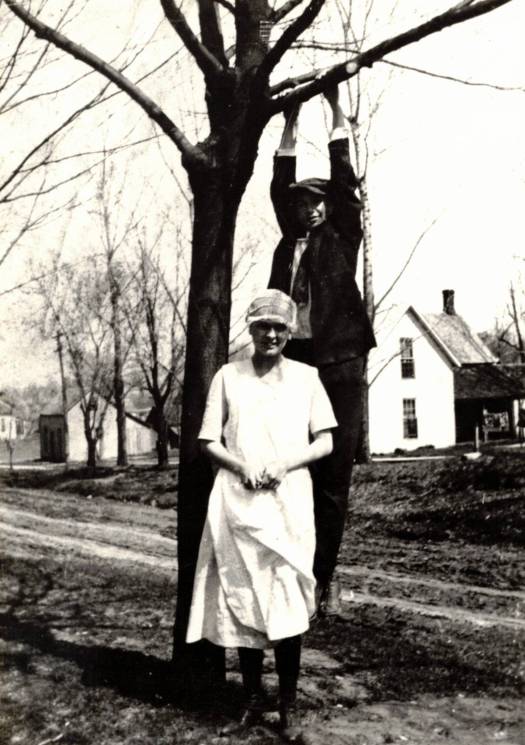
CletisandDaleWhite

My father’s family lived in southern Illinois and the western part of Indiana, traveling from outlying towns and small cities to Indianapolis, Indiana and Louisville, Kentucky, following railroad maintenance work, building roads and bridges, and toiling in mines and small oil fields. Mamaw and Papaw White (as we called Cletis and Dale), found some constancy after Great-grandad White retired. The railroad granted him a life-lease on a sharecropper’s farm, a scrap of land near the railroad lines Great-grandad walked and inspected with his lantern (the original occupation of those known as “linemen”). In between work projects, my grandparents parked their trailer on the land, sharing water from the well, jerry-rigging electricity from the single pole at the corner of their dirt road and the paved two-lane county road leading into Allendale, Illinois.

I never knew them in the years they struggled to raise a family during the depression, or how they felt sending their first son, my father, off to war at age 18, or both sons off to the Korean War. My memories are of sitting on the porch of my great-grandparents’ house, shelling beans and peas, shucking corn, sitting on top of the hand-crank ice cream maker to provide traction when the churning became difficult, our mouths watering at the smell of a freshly-plucked chicken frying in lard. We were charmed, thinking that outhouses, pot-bellied stoves for heating and cooking, and water hand-pumped into the kitchen all marvelous adventures in the 1960s. We scrubbed our clothes on a washboard, hanging them to dry in the backyard, and competed with each other for the right to wash my grandmother’s glorious head of shiny white hair. She would park her walker next to the well, and we rinsed her hair with water drawn in a galvanized bucket.
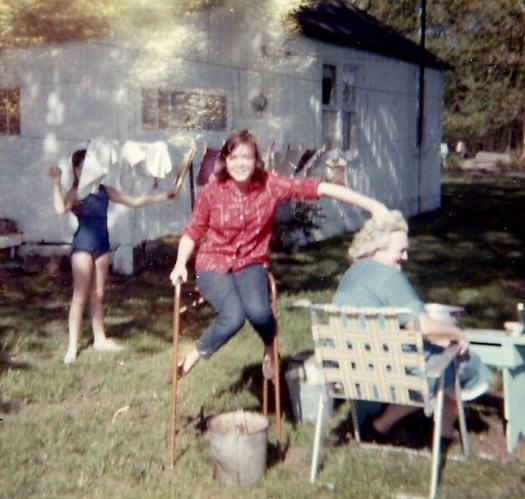
Washing Mamaws hair

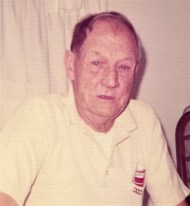
My grandparents moved to a series of trailer parks after Great-grandad died and they lost the lease on the farm, relocating to Indianapolis to live with my aunt after Mamaw broke her hip for a second time. My final memories of them are of illness, and flares of Irish temper always ending in laughter. Mamaw called Papaw a rascal.  He called her “old woman.” They died just a year apart. They loved for a lifetime.

MaMaw                        PaPawWheelchair hugs

TAX Time Tune-up

Tax season is upon us. As a 6-year volunteer for the AARP Tax Aide program, I offer some information about our program and a helpful link from the “Your Money Advisor” section of the New York Times.

And this just in: 

The IRS has been working fast and hard to implement new tax policies that may assist those who suffered from losses due to the hurricanes in 2017. If you live in an area (or lived at the time–in case you moved) that was declared a federal disaster area, and you suffered economic losses for which you were not compensated, there may be some tax relief for you. Casualty Losses are out of scope for the Tax Aide program, but if you took money out of a 401K or IRA to cover damage or housing expenses or if you lost income from work, there may be options that can help you. See a tax counselor or go to IRS.gov for more information.

AARP Foundation Tax-Aide celebrates its 50th anniversary in 2018

Beginning February 1 and continuing through April 17, AARP Foundation is providing free tax assistance and preparation through its Tax-Aide program. AARP Foundation Tax-Aide, celebrating its 50th year, is the nation’s largest free tax assistance and preparation service. Over the last 50 years, we’ve helped more than 50 million taxpayers get the tax credits they deserve.

To find a Tax-Aide site or more information, including which documents to bring to the tax site, and a list of locations, visit aarpfoundation.org/taxaide.

 Here are a few highlights about Tax Aide:

  • While the program is especially geared to help low-income older taxpayers, all are welcome.
  • Some returns may be “out of scope” for our volunteers due to complex tax laws, or limitations within the software, or available training for Tax Aide counselors. Each site reserves the right to determine whether a return is within their abilities to file it. Tax Aide is funded in part by an IRS grant specifically for Efiling returns. The program does not prepare “sample or draft” returns or paper returns.
  • There’s no fee and no sales pitch, and AARP membership is not required.
  • Tax-Aide started in 1968 with four volunteers working at one site. Today, nearly 35,000 volunteers serve in almost 5,000 locations in neighborhood libraries, malls, banks, community centers and senior centers, in all 50 states and the District of Columbia from February 1 to mid-April.
  • Tax-Aide volunteers identify credits for taxpayers — $222 million in Earned Income Tax Credits (EITC) in 2017. Communities benefited from the $1.3 billion in refunds taxpayers gained in 2017. Taxpayers also avoided any tax preparation fees and pitches for high-interest tax credit or refund loans.
  • The program goes where community residents are; assistance is provided at community and neighborhood centers, libraries, schools and other convenient locations.
  • No matter the changes to tax codes or laws, Tax-Aide provides a trusted service.
  • Tax-Aide volunteers are trained and IRS-certified each year to ensure they know about and understand the latest changes and additions to the U.S. Tax Code.
  • There is no Tax-Aide without volunteers. Tax-Aide volunteers are essential to the program. Each year, nearly 35,000 volunteers run the program, from greeting taxpayers to preparing taxes.

 OF MOST IMPORTANCE FOR THOSE WHO USE OUR SERVICE:

  • BE PREPARED: Bring photo IDs for both Taxpayer and Spouse (if applicable) and Social Security cards or ITIN documents for ALL people included in the return. Keep in mind that if you are “Married Filing Separately,” you will still need your spouse’s social security verification. It is always helpful to bring a full copy of last year’s tax return.

CHECK OUT THIS LINK FROM THE NYTimes for more tax season information: 

Living in the Painful Moment

Breathe and release. Catch and release. Feel the pain. Release.

Comfort1

Living with chronic pain in the new year overtook all intentions to create a serious list of resolutions, a mindful sense of purpose for the next many months. Instead, I amend my daily to-do-lists in new ways.

Do I need to take all those steps down the grocery dairy aisle? Can we survive another day without yogurt?

When writing lesson plans for training classes, I consider how long I will stand at the computer, clicking forward through powerpoint slides. How long must I perch atop those brutal folding metal chairs? More classroom breaks, more often!

I choose to drive or be the passenger based on which leg or hip is aching more. My right side? I willingly relinquish the car keys. My left side? Move over and let me drive, please!

If ever I failed to empathize appropriately with anyone experiencing pain of any kind, I beg forgiveness.

The Dali Lama proposes: “Pain is inevitable; suffering is optional.”

I imagine my physical therapy regimen will require pain. I will be coached to push through it, to conquer the suffering and get to the other side. My new orthopedic doctor diagnosed me with one x-ray and three pokes of a single finger–once to the fleshy part of each hip, once to my lower back. The doctor stated he was referring me to his partner, a spine and bursitis specialist, to treat me for severe arthritis in my lower lumbar region and bursitis in both hips. I had thought an old muscle injury flared up. I was wrong.

Humbled, I remain hopeful. I explore my tolerance for things outside my control and re-acquaint myself with the adage that it’s not the pain or the suffering as much as how you respond to it. So there lies my resolution, my aspiration.

Feel the pain. Release.

Let it be enough

Christmas mouse

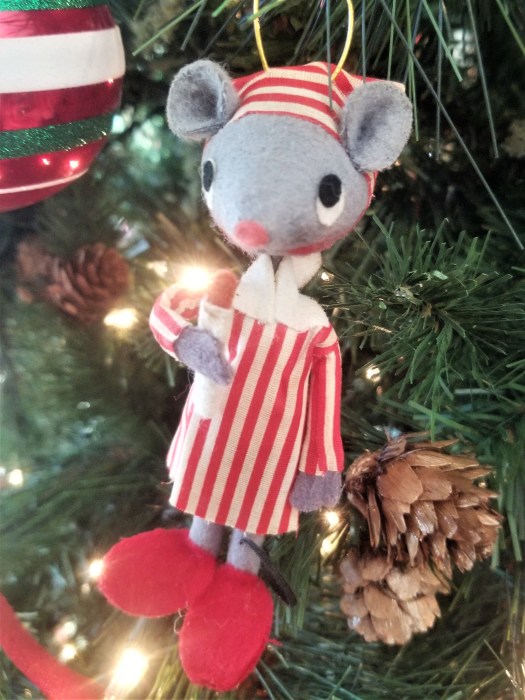
Wishing you all warm memories this holiday. On Christmas Eve, our kitty held court over us as we lounged in our reading chairs and ottomans, reading books and watching Christmas movies. The mouse on the tree taunted her as do the chirping birds in cages whom we supervise while our son works. We ate leftovers for dinner. Leftovers!

Phone calls and texts from friends and family far away stand in for their physical presence–the joy of having your life long best friend text you “Merry Christmas” the moment you open your eyes–becomes the new tradition. Later, we talked on our headphones as we worked in our kitchens, a thousand miles apart.

These “virtual” memories, as real as those long-distance phone calls charged-by-the-minute when we shouted greetings to our grandparents, suffice for now.

Giving thanks for the day, for the light sparking on the lake. Let this be enough.

Christmas tree and cat

It’s Not Helping

An interview in the New York Times with playwright/satirist/director Robert O’Hara encapsulated the trajectory of my year–the intent of my December 31, 2016 resolution–with this statement: “Being private is not helping.” Sadly, I did not articulate my goal to become an advocate of change nearly as clearly. But that is the gist of it: be outspoken, out there, real, loud, visible. Granted, as a people-pleasing, conflict avoiding, occasionally passive-aggressive introvert, my out there may not be very loud.  But my ears ring and my palms sweat as soon as I hit that “send” or “publish” or “post” button.

Hubris does not drive me. I don’t think I have any better ideas than the next person about how to fix the tax plan, prevent mass killings, or safeguard medicaid and social security. But I have found that avoiding discourse, NOT talking about what is going on around us is not helpful. For years, the general rule has been, “don’t talk politics” at dinner, in the grocery store aisle, in the back yard with your neighbors. Wrong. Talking politics is exactly what we should be doing, and values, and  how we voted and why.  And religion. Yes, we should talk about religion. How else will we understand our neighbors, the Muslim owner of the local deli, the Vietnamese manicurist, or the banker from Ghana who processed our car loan?

I live in a small town where I am in the minority: I don’t own a gun. I would benefit from better understanding why my neighbors do. Then, perhaps, I can advocate for gun control more effectively.

My next New Year’s resolution is more of the same, because being private is not helping. Explore your discomfort zone, people. A diverse, collaborative society does not happen unless everyone shares their views. Listen. Listen loudly.

Well-Seasoned Greetings

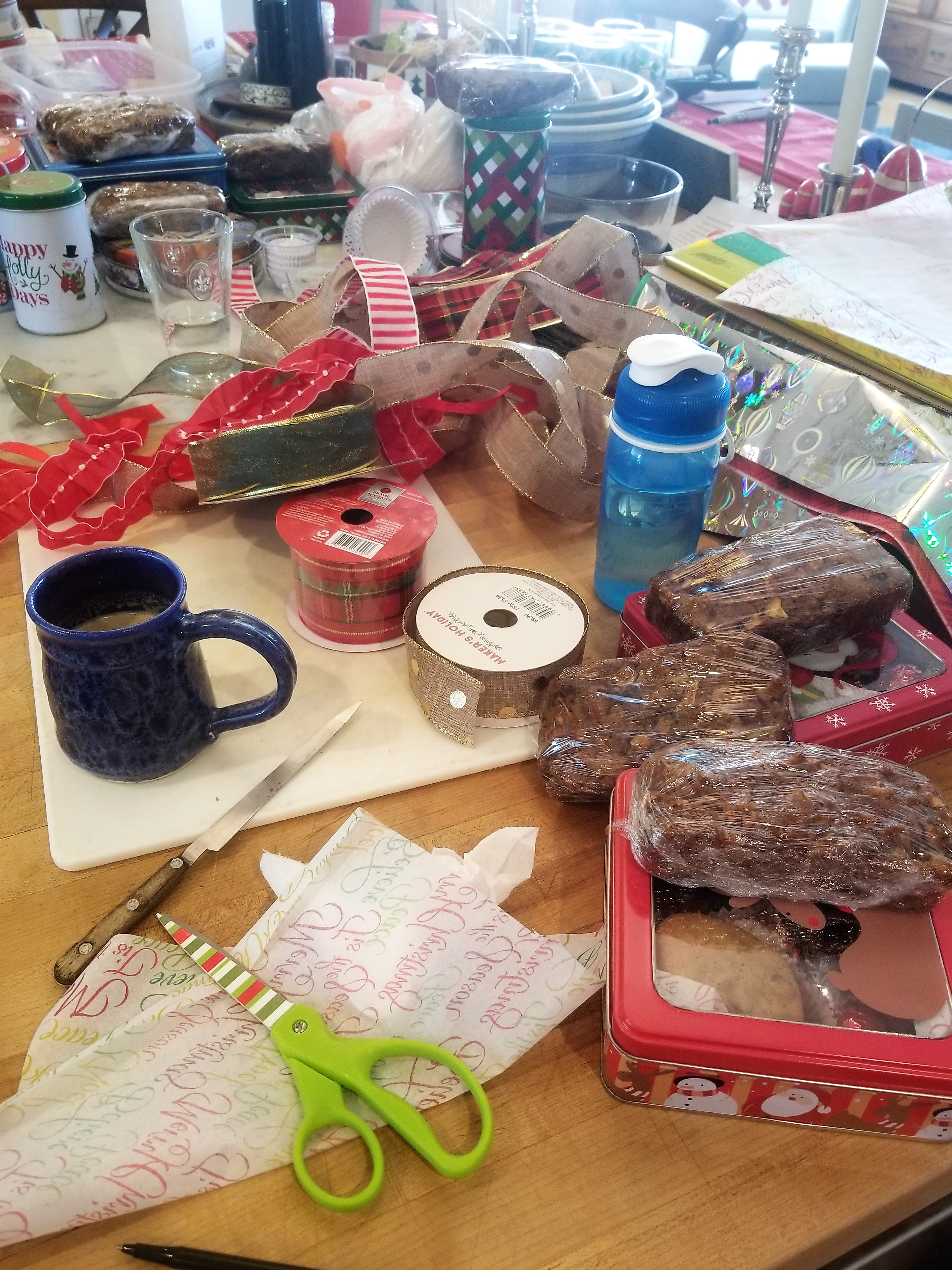
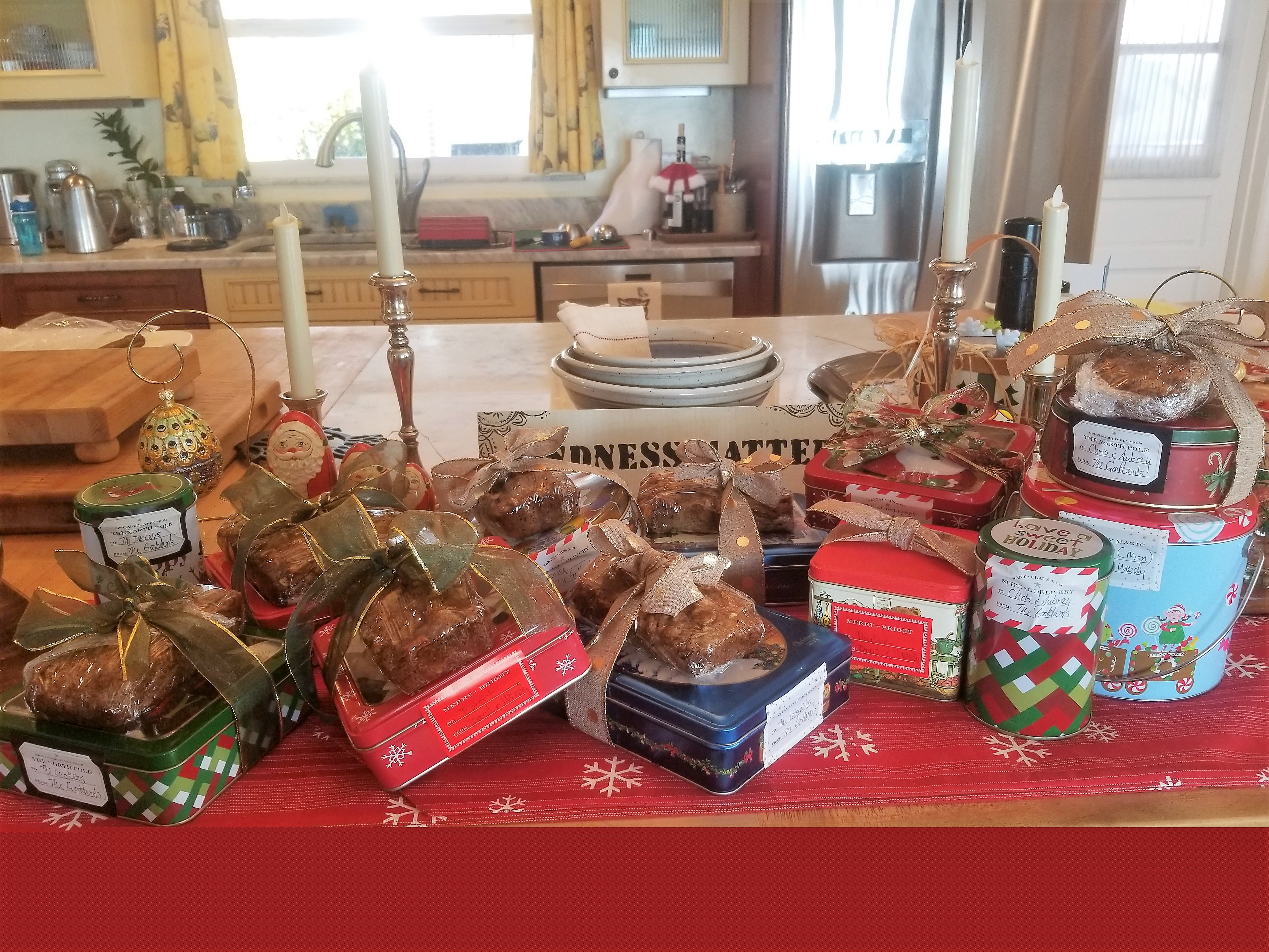
After a day and a half of sifting and chopping, the friends and family holiday treats sit ready on our kitchen island, awaiting delivery. I took a few shortcuts this year, eschewing the Santa’s Whiskers and Slovakian Butter Cookie cut-outs for good old Toll House, and I bought fudge for the first time. Sorry, Mom–nothing compares to your carefully crafted “Millionaire” version. But the Apple Bread remains. The scent of cinnamon and apples perfumed our home while Christmas carols performed by country artists serenaded us. I measured and stirred, seasoned and baked.

This morning, assembling cookie tins, portioning salted caramel brownies, and wrapping moist loaves of apple bread, I remembered all the moments of the past year, sweet, savory, salty–the taste of fear and disappointment, the surprise of joy, the comfort of waking up to tomorrow, the scent of forgiveness.

May your holidays allow you time to reflect, provide a taste of memories to come, and infuse you with joy.

Whisking your way through the holidays

My husband and I met while I was making the last batch of hollandaise for the last plates of eggs benedict served at the last Sunday brunch on the last day I co-owned The Purcellville Inn in Loudoun County, Virginia. I hated him on sight.

Out of admiration and in perfect innocence, David had made his way through the service doors in the main dining room, down the stairs, and into my kitchen. As I stood whisking clarified butter and tears into a cloud of egg yolks, I listened incredulously to him extoll the virtues of a good hollandaise.

“Where does this guy get off?” I wondered. “And when will he leave?”

Unaware of my disdain, David thanked me for my time, wished me luck in my new endeavors, and ambled his way back to his table.

Eighteen months later we met again, in the copy room of a law office near the White House where the catering company I consulted for set up a remote kitchen in preparation for a swank Christmas party. David was to be our “fireman” and general dog-body trouble shooter. Ironically, he did put out a fire that night caused by a food hotbox overheated by sterno tins. He ordered my catering partner to stand atop a chair. As she held her apron aloft, fanning the fumes away from the smoke alarm, David smothered each flaming can of fuel. I whisked boiling cream into dark chocolate for dessert fondue, thinking, “Maybe this guy’s okay.” Six months later, we fell in love.

Last year, we bought our first pre-lit, slowly spinning Christmas tree. I no longer have to worry about where to put my favorite Christmas kitchen ornament. The small beribboned whisk rotates into view every ninety seconds or so. I remember my tears dropping into the hollandaise, and how lucky I was to find my true love through sorrow and fire and food, whisking my way to happiness.

May you stir up a little love and joy this holiday season.

the whisk and the blue icicle

Lions and tigers and bears on and under the tree

Polar Bear

On our first Christmas in the first home we owned (our fourth Christmas in Florida), a co-worker gifted each of our children with a stuffed bear.  She handed the smaller package to our youngest child, Ally.  Matthew waited patiently for his younger sister to unwrap her package, taking delight in showing her how to press the belly button on the little fellow. A holiday carol played. When Matthew unwrapped his somewhat larger package, a simple ribbon adorned his bear, instead of the festive tartan plaid vest and bow tie worn by Ally’s bear.  Ally reached out and christened Matt’s toy “Bearsy!”

As children do, they swapped presents and both bears sat beneath our Christmas trees for years to come. Little bear eventually lost his bow tie, and who knows what happened to the vest, or when the carols stopped playing. As the older child, our son lost interest in little bear early on, but Ally had love enough for both, as well as all the stuffed animals to come. She never slept or traveled without a bear, finding comfort in her dreams and waking moments.

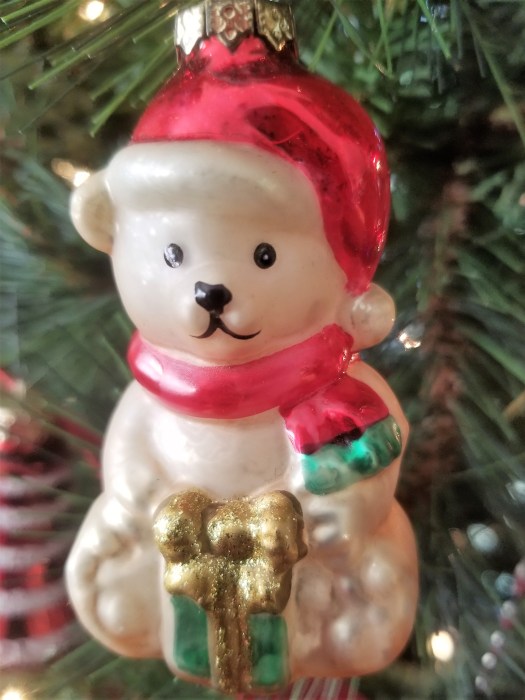
Only Bearsy survives. I found him this summer in a bin of clothes and shoes Ally gave me her okay to donate when I cleaned out closets. With his coat worn smooth, his nose shined, and new satin ribbons tied round his throat, he once again sits beneath our Christmas tree. Perhaps, he will strike up a friendship with the little bear ornament we picked out years ago, an echo of old friends. Ally won’t be home for Christmas this year, but Matthew will be here to help celebrate and reminisce about Christmases past, and a little blue-eyed girl with blonde curls who loved her bears.

Bearsy under the tree

Hallmark Moments, TV Pablum, and Star Wars

I think I’ve somehow gained five pounds. Since Thanksgiving. This does not bode well for the rest of the holiday season. I am overweight, but my weight is stable, and my diet is generally healthy: almost no processed food, low salt, made from scratch cooking, mostly fresh. We follow a gluten frugal diet and rarely consume sugar. Frozen items are fresh foods I portioned and wrapped and froze myself. I hydrate appropriately. I frequently get up from my computer and move, although the steps-tracking app on my phone has disappeared somehow.

To what do I have to blame this aberration? The Hallmark Channel. I confess, I am becoming a TV Pablum aficionado. Is there a twelve-step program for sappy movie addicts? Taking a break from the NY Times, NPR talk radio, the check-out-line-shouting headlines, my husband and I watch Hallmark or Lifetime or Hallmark Mystery. Our typical Sunday night routine? I indulge in the import PBS series of the season: currently Outlander, snuggled deep in bed pillows with the cat. My husband lounges in the living room channel-surfing between Gears, and Diners, Drive-Ins and Dives, with the occasional foray over to House Hunters International or Property Brothers.

This season? All Hallmark all the time. The cat now executes her “thunder runs” up and down our thirty-foot hallway, trekking between the two rooms, the two TVs, and her two glazed and numbed caretakers. Oh, that’s right, we are not cat owners, we are staff.

We took a little break last night, pulling up “The Force Awakens” from On Demand in preparation for the latest Star Wars new-movie-issue due out on Thursday of this week. On this viewing, my emotions did not rise at the playing of the opening theme music. Nor did my heart quicken at the first appearance of Han Solo, or when the fighter pilots made their last-ditch approach to take out the planet-destroying-death-gizmo. Instead, I teared up as the little droid BB-8 entreated R2-D2 to come out of hibernation. I sniffled when Daisy hugged Finn for rescuing her. I sobbed when Han and Leia’s son struggled between the pull of the Force and the Dark Side. In other words, I experienced my Star Wars Hallmark movie.

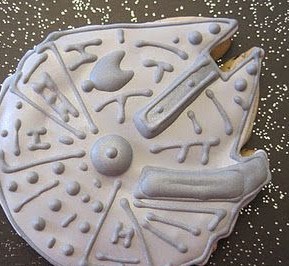
Somewhere, deep in my pantry, I harbor a Star Wars Millennium Falcon cookie cutter. Time to soften some butter and grate some ginger. I wonder if we have any molasses? Maybe tonight, Hallmark will show again that film about the baker’s niece who has to resurrect the annual Christmas Eve cookie competition and rekindles a long ago lost love? Maybe if my husband and I watch the same movie, I can get some steps in by chasing our cat on her thunder runs down the long hallway. Better yet if I can avoid eating the cookies.

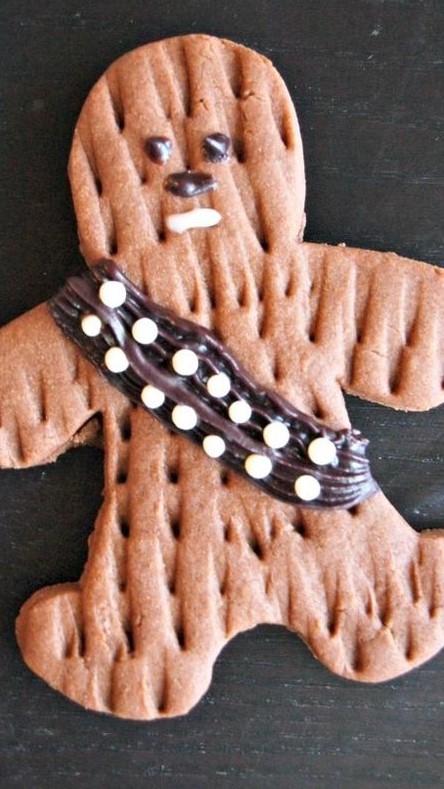
Wishing you all a merry Wookie holiday.

GLUTTONY: Home, Where Gluttony Knows Your Name

Wyn’s Texas Tacos–generations follow and enjoy.

(This post was originally published on the Gloria Sirens blog in July of 2014)

Essence of fresh ripe tomato and homemade sauce mingle with garlic- scented meat and rendered fat as I bite into tender, yet crisp, tortillas. Having mastered the art of slurping with each bite of taco, I avoid the rivulets of juice running down the wrists and forearms of family and neighbors during a dinner of Wyn’s Famous Texas Tacos.  This remains the only meal in which the paper towel roll sits center table, elbows may perch beside plates, and tongues may lick fingers.

garlic and tomatoes

As the daughter of an army officer and an army officer’s well-schooled-in-all-things-protocol wife, I remain devoted to table manners and table settings. Stacks of folded cotton napkins line buffet drawers, ready to set the table for every meal, adorning a color coordinated placemat or tablecloth, of course. The sterling silver flatware presents itself for use most weeknights and the bread basket waits.

But not on taco night. Throughout my childhood, tacos ruled as the most coveted dinner invitation in the neighborhood. Our mother cooked a lovely leg of lamb, an unctuous rib roast adorned with a mustard and herb crust attended by golden Yorkshire puddings, a pot roast served up with buttery whipped potatoes so cloudlike in their china bowl I never knew if the moisture in our father’s eyes resulted from the rising steam or tears of food love. Tacos, however, claimed all the glory, inspiring debates about preparation techniques, garnishing strategies, and the gauntlet of gluttony: who would eat the most tacos tonight and break the family record?

Tacos

Mom fried tacos under any conditions, a Sisyphean challenge at many of our Army postings, battling the mid-twentieth century frozen, canned, pre-packaged food wasteland. Before the explosion of Cal-Tex-New-Mex cuisine, before margarita-fueled two-for-one-taco-night cantinas, before food truck pods, street food carts and celebrity chefs, our mother, Wynelle, would strap on her ruffled apron and send my father in search of tortillas. During the brief periods we were home in Texas, Dad navigated dusty dirt roads on the far side of town, past the water tower and the tracks, scanning for that solitary woman or a cluster of mamacitas gathered around a wood-fueled fire in the yard. They sat rolling balls of masa between plump palms, flattening them between their knees, the slap slap of their thighs accompanied by the splat of tortillas thrown onto the hot flat stone.

tortillasamano

The roasted corn smell as it wafted off the rock remained a sensory food memory for both my parents, the one thing my mother craved during pregnancy, the scent of fresh tortillas honored and ritualized by my father after finishing his first taco at dinner: “Mmph,” he would snort, then sigh, then sniff, then pause. Then he would reach for another.

Tacos, gluttony knows thy name.